
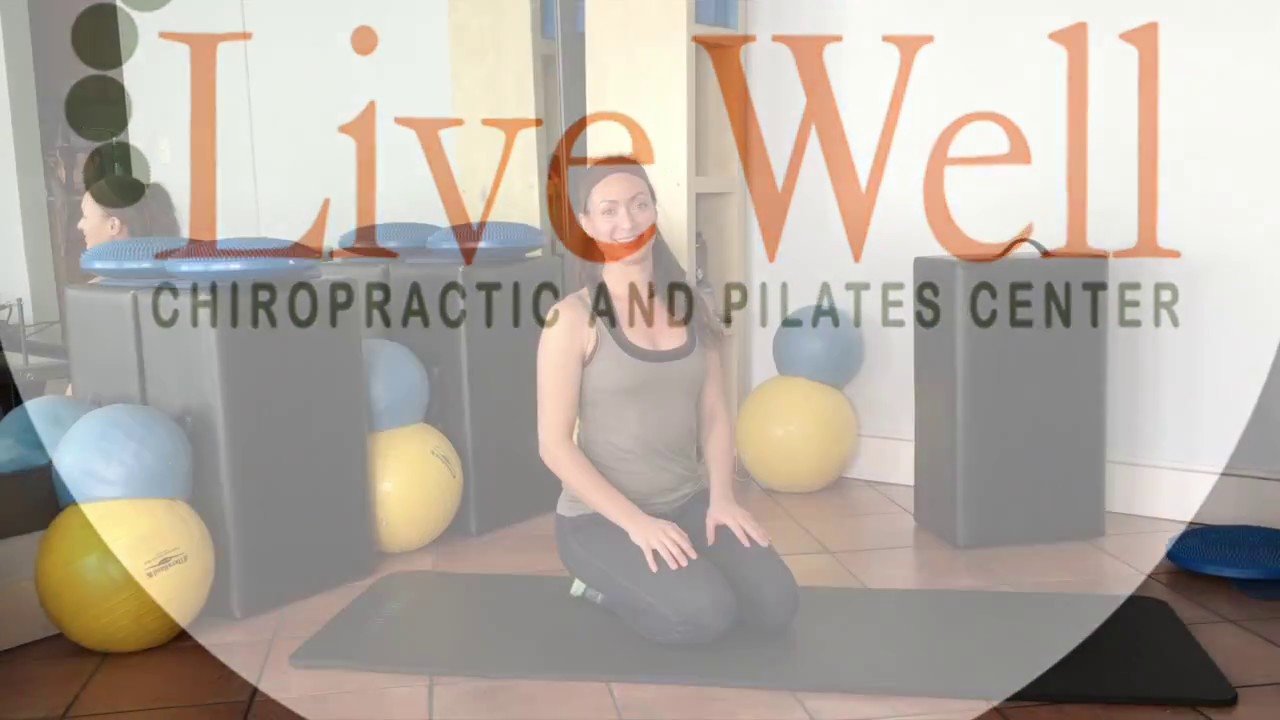
3 Piriformis Stretches for Sciatica and Lower Back Pain Relief
Piriformis tightness can contribute to buttock pain, hip stiffness, lower back discomfort, and symptoms that feel similar to sciatica. In the video above, Dr. Matthew Gloin, D.C. and Leda Lum from Live Well Chiropractic and Pilates Center demonstrate three ways to stretch the piriformis safely and gently. These piriformis stretches are intended to support gentle mobility, not to force the hip or aggravate nerve symptoms.
The piriformis is a deep hip rotator muscle located under the gluteal muscles. It helps rotate the hip, stabilize the pelvis, and support healthy walking and movement patterns. Because the sciatic nerve travels close to the piriformis, irritation or tightness in this area may sometimes contribute to pain, tingling, or discomfort that travels from the buttock into the leg.
Many people searching for sciatica relief in Los Angeles assume the problem is always coming directly from the lower back. Sometimes it is. Other times, hip mobility, pelvic mechanics, prolonged sitting, muscle imbalance, or piriformis irritation may also play a role. That is why a proper evaluation is important if symptoms persist or keep returning.
What Does the Piriformis Muscle Do?
The piriformis is small, but it has an important job. It helps the hip rotate outward, assists with pelvic stability, and contributes to smooth lower-body movement. When the muscle becomes overworked, compressed, or chronically tight, it can change how the low back, pelvis, and hips move together.
The NCBI Bookshelf review on piriformis syndrome explains how irritation around the piriformis may affect the nearby sciatic nerve and contribute to sciatica-like pain in some people.
Common symptoms associated with piriformis tightness or irritation may include:
- Deep buttock pain or tenderness
- Hip tightness, especially after sitting
- Discomfort that travels into the back of the thigh
- Sciatica-like pain, tingling, or numbness
- Lower back stiffness related to poor hip mobility
Stretching may help reduce tension, but it should always feel gentle. Sharp pain, increased numbness, or worsening symptoms are signs to stop and seek professional guidance. The American Academy of Orthopaedic Surgeons spine conditioning guidance notes that exercises should not cause pain and should be performed with appropriate supervision when needed.
1. Supine Figure-4 Piriformis Stretch
Best for: beginners, people with limited hip mobility, and anyone who wants a gentle stretch while lying down.
- Lie comfortably on your back with both knees bent.
- Cross one ankle over the opposite knee, creating a figure-4 shape.
- Gently pull the supporting leg toward your chest.
- Keep your shoulders relaxed and breathe slowly.
- Hold for 20 to 30 seconds, then switch sides.
You should feel a comfortable stretch deep in the buttock of the crossed leg. Do not force the position or bounce.
2. Seated Piriformis Stretch
Best for: people who sit at a desk, drive frequently, or feel hip tightness during the workday. Among the three piriformis stretches, this one is often the easiest to do during a work break or after a long drive.
- Sit upright in a sturdy chair.
- Place one ankle over the opposite knee.
- Keep your spine tall and your chest open.
- Lean forward slightly until you feel a gentle stretch in the buttock.
- Hold and breathe slowly, then repeat on the other side.
This is a helpful stretch for people whose symptoms are aggravated by prolonged sitting. If sitting posture is part of the problem, our posture correction program in Los Angeles may also help address the underlying movement habits.
3. Modified Pigeon Stretch
Best for: people with better hip mobility who can comfortably get down to the floor.
- Begin on your hands and knees.
- Bring one leg forward and angle the knee gently in front of you.
- Extend the opposite leg behind you.
- Keep your hips level and avoid twisting into the stretch.
- Hold gently, breathing slowly, then switch sides.
This stretch should never be forced. If the modified pigeon position causes knee pain, hip pinching, or increased nerve symptoms, choose one of the gentler options above instead.
Are Piriformis Stretches Enough to Fix Sciatica?
Piriformis stretches can be helpful, but stretching alone is not always the complete solution. Sciatic symptoms may come from several sources, including lumbar disc irritation, joint restrictions, poor pelvic mechanics, muscle imbalance, prolonged sitting, or repetitive movement patterns.
A complete approach may include chiropractic care in Los Angeles, mobility work, strengthening, soft tissue corrective therapy, posture correction, and Pilates-based movement training. At Live Well Chiropractic and Pilates Center, we look at how the spine, pelvis, hips, and surrounding muscles work together so treatment can be based on the likely source of the problem.
If your pain feels more like true sciatica, learn more about our sciatica treatment in Los Angeles.
When Should You See a Chiropractor for Sciatica or Piriformis Pain?
Consider a professional evaluation if you experience:
- Pain that lasts more than several weeks
- Repeated flare-ups
- Numbness, tingling, or symptoms traveling down the leg
- Difficulty sitting, walking, working, or exercising comfortably
- Symptoms that worsen when you stretch
A chiropractor can help determine whether your symptoms are more consistent with muscular tightness, spinal involvement, or another source. For many patients, combining chiropractic care with targeted stretching and movement retraining can improve mobility and function.
Piriformis Stretch FAQ
Can a tight piriformis muscle cause sciatica?
A tight or irritated piriformis may contribute to symptoms that feel similar to sciatica because of its close relationship with the sciatic nerve. However, leg pain can also come from the lower back, so evaluation is important when symptoms persist.
How often should I stretch my piriformis?
Many people benefit from gentle stretching several times per week. The best frequency depends on your symptoms, mobility, and the reason the muscle is tight in the first place.
Should I stretch if it makes my pain worse?
No. Stretching should not increase pain, numbness, tingling, or symptoms traveling down the leg. If symptoms worsen, stop and get evaluated.
Can chiropractic care help piriformis-related pain?
Chiropractic care may help improve joint mobility, pelvic mechanics, posture, and movement patterns depending on the individual situation. It is often most effective when combined with appropriate stretching and strengthening.
Helpful Resources on Piriformis Stretches and Spine Mobility
Visit Live Well Chiropractic and Pilates Center in Los Angeles
Live Well Chiropractic and Pilates Center is located at 5553 W Pico Blvd in Los Angeles, CA 90019. Dr. Matthew Gloin, D.C. has been helping patients improve movement, posture, and spinal health since 2003.
If you are dealing with lower back pain, buttock pain, hip tightness, or sciatica-like symptoms, schedule a consultation to find out what may be contributing to your discomfort and which exercises are appropriate for your body.
Call Live Well Chiropractic and Pilates Center: (323) 930-9355
Originally published: August 5, 2026 · Updated: August 5, 2026
← Back to all articles