
Iliopsoas Tendonitis Treatment: Symptoms, Causes & Recovery
If you are searching for iliopsoas tendonitis treatment, this guide explains symptoms, causes, recovery steps, and care options for hip flexor pain. It also covers hip flexor tendonitis, psoas tendonitis, iliopsoas syndrome, anterior hip pain, and groin pain when lifting the leg.
Last updated: July 25, 2026
What Is Iliopsoas Tendonitis?
Iliopsoas tendonitis is irritation or overuse of the iliopsoas muscle-tendon unit. This muscle group is one of the main hip flexor systems. It helps lift the thigh and supports the hip and lower back.
The iliopsoas also helps with walking, running, stairs, kicking, and standing from a chair. When the tendon is overloaded, pain can develop in the front of the hip or groin.
This condition is also called hip flexor tendonitis, psoas tendonitis, or iliopsoas tendinopathy. Tendonitis usually refers to tendon inflammation. Tendinopathy is broader. It can include overload, tissue sensitivity, and reduced tendon function.
Common Pain Pattern
Many people feel pain in the front of the hip or deep groin. Symptoms may appear when lifting the knee, walking uphill, running, climbing stairs, or standing after sitting. Some cases also involve iliopsoas bursitis.
Care Options at Live Well Center
At Live Well Center in Los Angeles, care may include chiropractic care, massage and soft tissue therapy, Pilates-based strengthening, acupuncture, mobility work, and progressive rehab. Your plan depends on your symptoms, movement, and goals.
Iliopsoas Anatomy: Why This Muscle Matters
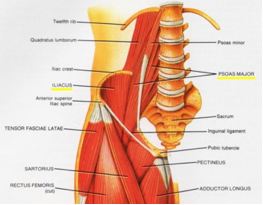
The iliopsoas is made up mainly of two muscles: the psoas major and the iliacus. The psoas major starts along the lumbar spine. It travels through the pelvis toward the upper thigh.
The iliacus begins inside the pelvis. It joins the psoas on its way to the femur. Together, these muscles attach near the upper inner thigh at the lesser trochanter.
This shared tendon can become irritated when load is too high. The iliopsoas helps with hip flexion, walking, running, stair climbing, trunk control, kicking, sprinting, and jumping.
Because the muscle crosses the hip and spine, symptoms can mimic other problems. Pain may feel like a hip, groin, pelvic, or low back issue. A careful evaluation can help find the main source.
Iliopsoas Tendonitis vs. Iliopsoas Syndrome
These terms are often used together. Still, there are useful differences. Iliopsoas tendonitis often develops slowly from repetitive stress or increased load on the hip flexor tendon.
It is common in runners, cyclists, dancers, soccer players, martial artists, and active adults. It can also affect people who repeat hip flexion during work, exercise, or daily life.
Iliopsoas syndrome is a broader term. It can describe irritation, strain, spasm, snapping, or poor function of the iliopsoas muscle-tendon complex.
Iliopsoas bursitis happens when the bursa near the tendon becomes irritated. This can add to pain in the front of the hip or groin.
Common Symptoms of Iliopsoas Tendonitis
Symptoms can vary by cause and severity. Common signs include pain in the front of the hip or deep groin. Some people feel pain with stairs, hills, running, cycling, or standing after sitting.
- Pain in the front of the hip or deep groin
- Groin pain when lifting the leg
- Discomfort with stairs, hills, running, sprinting, or kicking
- Tightness in the hip flexor area
- Clicking or snapping in some cases
- Reduced hip extension or shorter stride length
- Low back tightness linked to hip flexor tension
Tendon pain often builds over time. A strain or tear may feel different. It can cause sudden, sharp pain during sprinting, kicking, or changing direction.
What Causes Iliopsoas Tendonitis?
Iliopsoas tendonitis treatment works best when it addresses the cause. Common factors include repetitive hip flexion, sudden training changes, limited hip mobility, weak core control, prolonged sitting, prior injury, and technique changes.
Repetitive Hip Flexion
Repeated knee lifting or hip flexion can overload the tendon. Running, cycling, rowing, stair climbing, soccer, dance, martial arts, and some gym exercises can all contribute.
Sudden Training Changes
A fast increase in mileage, hills, speed work, squats, lunges, or intense workouts can exceed tendon capacity. Even healthy tendons can become painful when workload rises too quickly.
Poor Hip or Core Control
Weakness in the glutes, abdominals, pelvic stabilizers, or deep hip muscles can increase hip flexor stress. Pilates-based rehab may help by improving alignment, breathing, trunk stability, and hip control.
How Iliopsoas Tendonitis Is Diagnosed
A clinician may review your history, training load, hip mobility, strength, gait, posture, and painful movements. An exam may include range of motion testing, resisted hip flexion, palpation, squats, step-ups, and low back screening.
In some cases, a medical provider may recommend ultrasound or MRI. Imaging can help when symptoms are severe, persistent, traumatic, or unclear.
Front hip and groin pain can come from many sources. These include hip joint conditions, labral irritation, hernia, stress fracture, nerve irritation, and pelvic or abdominal conditions.
Iliopsoas Tendonitis Treatment: What Helps?
Most cases are treated without surgery. The goal is to calm irritation, restore mobility, rebuild strength, and return to activity without repeated flare-ups.
1. Modify Aggravating Activities
Rest does not always mean doing nothing. It often means reducing activities that trigger symptoms. You may need to adjust running mileage, hills, sprinting, kicking, deep lunges, heavy squats, sit-ups, cycling, or stair workouts.
Start with activity the tendon can tolerate. Then build gradually. This helps reduce flare-ups while keeping the body moving.
2. Use Short-Term Symptom Relief
Ice may help after activity when symptoms are irritated. Heat may help before gentle mobility work if stiffness is the main issue. Gentle movement is often better than complete rest.
Avoid painful stretching during a flare-up. Discuss medication questions with a qualified healthcare provider.
3. Restore Hip Mobility
Gentle mobility work may improve hip extension, pelvic control, and comfort. Aggressive hip flexor stretching can worsen symptoms when the tendon is sensitive.
The best approach depends on the main problem. It may be stiffness, weakness, tendon sensitivity, or poor movement control.
4. Strengthen the Hip and Core
Strengthening is a key part of iliopsoas tendonitis treatment. A program may include glute bridges, hip abduction, dead bugs, bird dogs, side planks, step-ups, split squats, controlled hip flexion, bands, and Pilates-based stability work.
Pilates can help with controlled movement, breathing, pelvic alignment, and deep core support. These skills can reduce stress on the hip flexors.
5. Reload the Tendon Gradually
Research on iliopsoas tendinopathy is limited. Still, peer-reviewed literature supports progressive loading for many tendon problems.
A case report in the International Journal of Sports Physical Therapy described a runner who improved with load management, eccentric-biased hip flexor exercise, kinetic chain strengthening, and gradual return to running. The article is available at https://pmc.ncbi.nlm.nih.gov/articles/PMC5717490/.
6. Address Soft Tissue Restrictions
Massage and soft tissue corrective therapy may reduce muscle guarding and improve comfort. It may also support mobility in the hip flexors, quadriceps, adductors, glutes, and low back.
Soft tissue work is often most useful when paired with strengthening and movement retraining.
7. Evaluate Spine, Pelvis, and Hip Mechanics
The psoas connects the lumbar spine to the hip. For that reason, iliopsoas pain may be affected by low back mechanics, pelvic position, or hip motion.
Chiropractic care may help identify restrictions, posture patterns, or movement habits that increase hip flexor stress.
8. Consider Acupuncture for Pain Modulation
Acupuncture may support pain relief, muscle relaxation, and nervous system regulation. It is not a standalone cure for tendon overload. It may help some patients move more comfortably during rehab.
A Phased Recovery Plan
Recovery timelines vary. Many people improve with a staged plan.
- Phase 1: Calm symptoms and identify triggers.
- Phase 2: Restore hip mobility and movement control.
- Phase 3: Build strength and tendon capacity.
- Phase 4: Return to running, cycling, sports, or fitness training.
Symptoms should not worsen during activity or the next morning. If they do, the load may be too high. For runners and active adults, return to activity should be gradual.
When to Seek Professional Care
Seek clinical evaluation if pain lasts more than one to two weeks despite activity changes. Also get care if pain is sharp, worsening, or limiting walking.
Other warning signs include deep groin pain with weight bearing, trouble lifting the leg, trauma, clicking, locking, catching, instability, numbness, tingling, night pain, or unexplained pain at rest.
Early evaluation can keep a mild tendon irritation from becoming a long-term problem. It can also help rule out other causes of hip or groin pain.
Current Clinical Guidance and Research
There are limited clinical guidelines written only for iliopsoas tendonitis. Current hip pain and tendinopathy research still offers useful guidance.
Common recommendations include individualized assessment, activity modification, progressive strengthening, load management, hip and trunk control training, gradual return to sport, and symptom education.
The American Physical Therapy Association has a guideline on nonarthritic hip pain. It includes evidence-informed recommendations for exam and physical therapy management. You can review the overview at https://www.apta.org/patient-care/evidence-based-practice-resources/cpgs/nonarthritic-hip-joint-pain-cpg.
Preventing Iliopsoas Tendonitis From Coming Back
Prevention depends on improving tendon tolerance. Warm up before running or sports. Increase training volume gradually. Avoid sudden spikes in hills, speed, or resistance.
Strengthen the glutes and core. Maintain hip mobility without forcing painful stretches. Break up long sitting periods. Use proper exercise technique and address low back or pelvic movement issues.
For athletes, prevention may include gait analysis, running form changes, footwear review, and sport-specific conditioning. A maintenance routine is often important after symptoms improve.
Frequently Asked Questions
What is the best iliopsoas tendonitis treatment?
The best treatment often combines activity modification, hip and core strengthening, mobility work, soft tissue care, and gradual return to activity. Your plan should match your symptoms, activity level, mobility, strength, and movement patterns.
How long does iliopsoas tendonitis take to heal?
Mild cases may improve within a few weeks. More persistent tendon irritation can take several months. Tendons often need gradual loading over time.
Should I stretch iliopsoas tendonitis?
Gentle stretching may help some people. Aggressive hip flexor stretching can irritate symptoms during a flare-up. If stretching increases pain, start with symptom control, gentle mobility, and strengthening.
Can chiropractic care help iliopsoas tendonitis?
Chiropractic care may help by evaluating how the spine, pelvis, and hip move together. If restrictions or movement issues add stress, chiropractic care may support a broader plan.
Can Pilates help hip flexor tendonitis?
Pilates can help when exercises are chosen well. It emphasizes core stability, pelvic alignment, breathing, and hip control. These skills can support hip flexor recovery.
Is massage helpful for iliopsoas tendonitis?
Massage and soft tissue therapy may reduce guarding and improve comfort. It works best when paired with strengthening and movement retraining.
Can acupuncture help iliopsoas pain?
Acupuncture may help manage pain, reduce muscle tension, and improve movement tolerance. It is usually best as part of a complete care plan.
When should I stop running with iliopsoas tendonitis?
Reduce or stop running if pain worsens during the run, changes your gait, increases afterward, or feels worse the next morning. A gradual return-to-running plan is often best.
About Matthew Gloin, D.C.
Dr. Matthew Gloin, D.C. is a Los Angeles chiropractor who has helped patients recover from pain and improve movement since 2003. His clinical approach emphasizes whole-person care, careful evaluation, and individualized treatment plans.
Care may include chiropractic care, therapeutic exercise, soft tissue therapy, Pilates-based rehabilitation, and complementary care when appropriate.
References
- Rauseo C. The rehabilitation of a runner with iliopsoas tendinopathy using an eccentric-biased exercise: a case report. International Journal of Sports Physical Therapy. Available at https://pmc.ncbi.nlm.nih.gov/articles/PMC5717490/.
- American Physical Therapy Association. Hip Pain and Movement Dysfunction Associated With Nonarthritic Hip Joint Pain: A Revision. Available at https://www.apta.org/patient-care/evidence-based-practice-resources/cpgs/nonarthritic-hip-joint-pain-cpg.
Originally published: July 25, 2026 · Updated: July 25, 2026
← Back to all articles